

 English
 русский
 عربى
عربى

A set of design, research and development, production, sales, installation in one of the professional new decorative materials enterprises.
Content
- 1 What Are Wall Panels Called? The Direct Answer
- 2 Common Names for Wall Panels by Category
- 3 Decorative Wall Panels: Materials and What They Are Called
- 4 Wall Panel Terminology by Room and Application
- 5 Acoustic Wall Panels: A Specialized Category
- 6 The Difference Between Wall Panels and Wall Cladding
- 7 How to Choose the Right Type of Decorative Wall Panel
- 8 Popular Decorative Wall Panel Styles and Design Trends
- 9 Exterior Wall Panels: Names and Applications
- 10 Industry and Trade Terminology for Wall Panels
- 11 Frequently Confused Wall Panel Names
What Are Wall Panels Called? The Direct Answer
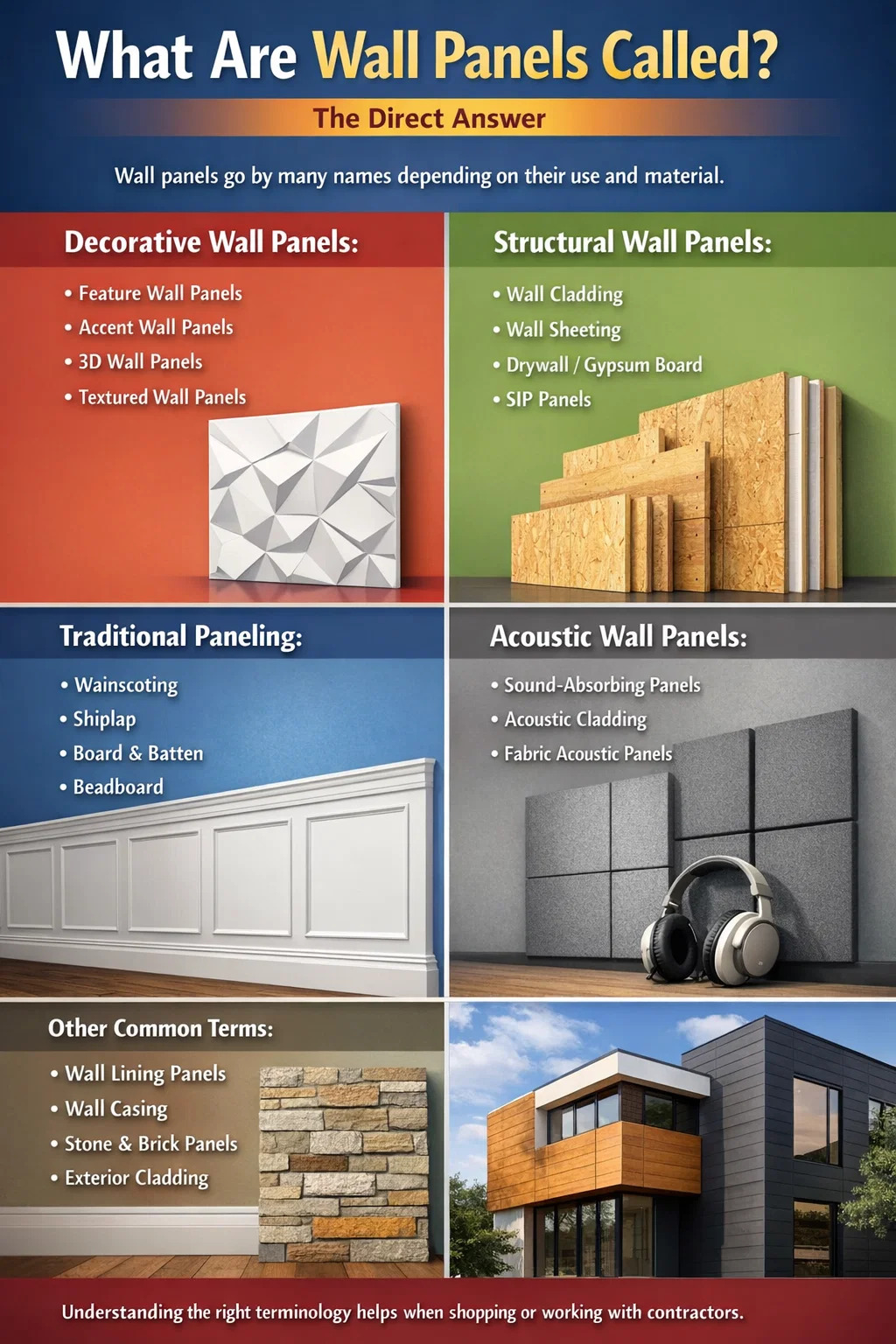
Wall panels are referred to by several names depending on their material, function, and location. The most common terms include wall cladding, wall lining panels, decorative wall panels, wainscoting, paneling, and wall sheeting. In architectural and interior design contexts, you may also hear terms like wall casing, feature wall panels, accent wall panels, or simply "paneling." The specific name used often reflects the panel's purpose — whether it is purely decorative, structural, protective, or acoustic.
In the construction industry, wall panels used to cover structural elements are frequently called wall cladding or wall liners. In residential interior design, the term "decorative wall panels" is the most widely used phrase, particularly for products designed to add texture, pattern, or visual interest to a room. Understanding the correct terminology helps when shopping, specifying products with contractors, or searching for installation guides.
Common Names for Wall Panels by Category
Wall panels are not a single product — they span dozens of subcategories, each with its own name. Here is a breakdown of the most frequently used terms organized by type:
Decorative Wall Panels
Decorative wall panels are surface coverings applied primarily for aesthetic purposes. They come in materials like PVC, MDF, wood veneer, 3D gypsum, metal, and fabric. You will often see them called:
- Feature wall panels
- Accent wall panels
- 3D wall panels
- Textured wall panels
- Wall art panels
- Interior cladding panels
Structural and Protective Wall Panels
These panels serve a functional or structural role. Common names include:
- Wall sheeting
- Wall cladding
- Wall board (e.g., drywall, gypsum board)
- Sheathing panels
- SIP panels (Structural Insulated Panels)
- Partition wall panels
Traditional Architectural Paneling
Historically, wood wall paneling in formal spaces was known as wainscoting when it covered only the lower portion of a wall (typically the bottom one-third), or as full-height paneling when it ran from floor to ceiling. Period styles have given rise to specific names:
- Beadboard — narrow vertical planks with a bead detail between each board
- Raised panel wainscoting — panels with a raised center field, common in colonial architecture
- Shiplap — horizontal boards with a rabbet joint, now popular in modern farmhouse interiors
- Board and batten — vertical boards with narrow strips (battens) covering the seams
- Linenfold paneling — carved wood panels imitating folded fabric, from Gothic and Tudor periods
Decorative Wall Panels: Materials and What They Are Called
The material used in a wall panel often determines how it is named and marketed. Below is a detailed overview of the most common decorative wall panel types by material:
PVC Wall Panels
PVC (polyvinyl chloride) wall panels are among the most widely installed decorative wall panels globally, especially in bathrooms, kitchens, and wet areas. They are also marketed as plastic wall panels, vinyl wall panels, or waterproof wall panels. Standard PVC panels typically measure 250mm–375mm wide and 2.6m–3m in length. They are lightweight, moisture-resistant, and available in hundreds of finishes including marble-effect, wood-effect, and solid colors. Installation costs for PVC panels typically range from $3 to $10 per square foot including materials, making them one of the most affordable decorative wall panel options.
MDF Wall Panels
Medium Density Fiberboard panels are commonly referred to as MDF decorative panels, MDF wall cladding, or MDF feature panels. They are popular for creating geometric accent walls, picture frame molding effects, and Shaker-style paneling. MDF panels are paintable, smooth-surfaced, and cost between $1.50 and $5 per square foot for the material alone. They are not suitable for wet environments unless specially sealed or coated with moisture-resistant paint.
Wood and Wood Veneer Wall Panels
Solid wood and wood veneer panels carry names like timber wall cladding, wood wall panels, reclaimed wood panels, and engineered wood wall panels. Wood veneer panels consist of a thin slice of real wood bonded to a substrate such as MDF or plywood, offering the appearance of solid wood at a fraction of the cost. Real solid wood panels can cost $8 to $30 per square foot, while veneer alternatives typically run $4 to $12 per square foot. Popular wood species used in decorative wall panels include oak, walnut, pine, teak, and cedar.
3D Gypsum and Plaster Wall Panels
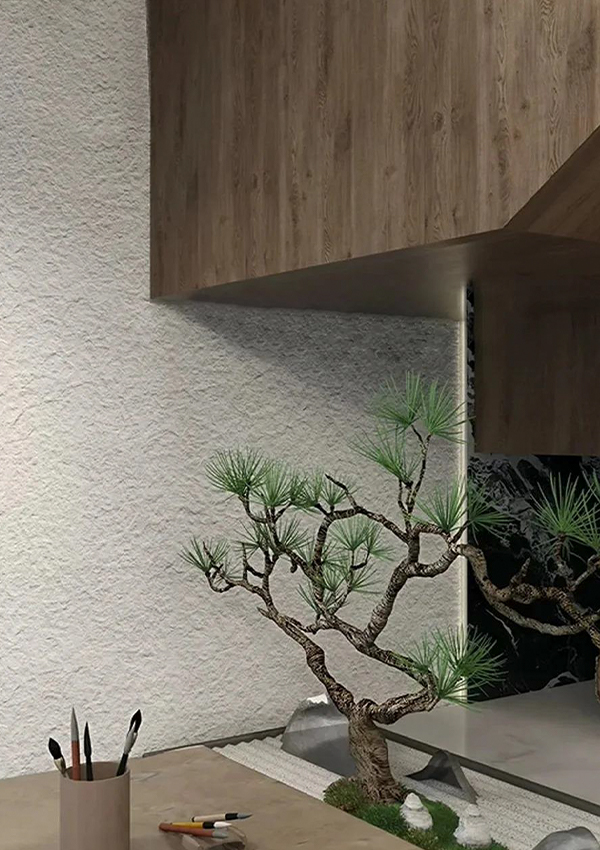
These are most commonly referred to as 3D wall panels, textured wall panels, or gypsum decorative panels. They create sculptural, dimensional surfaces through embossed or molded designs. Popular in contemporary and minimalist interiors, 3D wall panels are available in wave patterns, geometric shapes, brick imitations, and abstract motifs. Gypsum-based 3D panels are paintable and typically cost between $5 and $20 per square foot.
Metal Wall Panels
Metal wall panels are used in both commercial and residential settings. They go by names such as stainless steel wall cladding, aluminum wall panels, perforated metal panels, and corrugated metal wall panels. In commercial settings, metal panels serve both decorative and hygienic functions, particularly in food service environments and healthcare facilities. Costs range from $10 to $50+ per square foot depending on the metal type and finish.
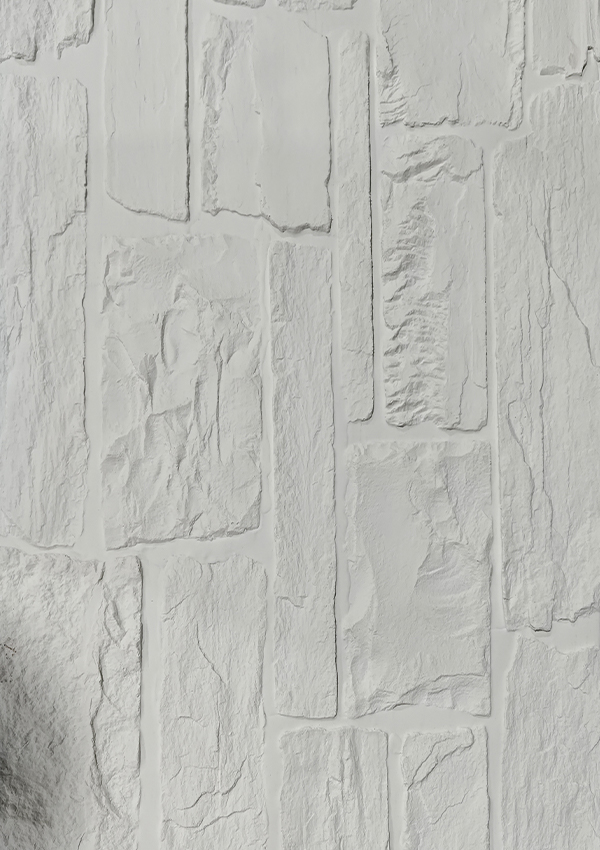
Stone and Brick Effect Wall Panels
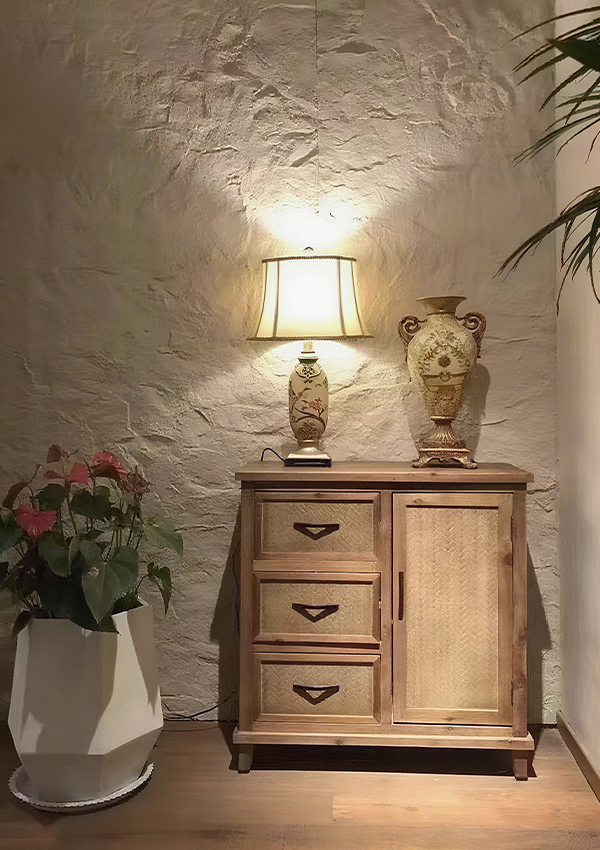
These panels replicate the look of natural stone, exposed brick, or slate without the structural requirements of real masonry. They are marketed as faux stone panels, stone-effect wall panels, brick-effect cladding, or lightweight stone veneer panels. Real stone veneer panels are cut from natural rock and can weigh 7–15 lbs per square foot, while manufactured stone or polyurethane faux stone panels weigh as little as 1–2 lbs per square foot, making them far easier to install.
Wall Panel Terminology by Room and Application
The name given to a wall panel often shifts depending on the room where it is installed or its specific application. Interior designers and contractors frequently use room-specific terms:
| Room / Application | Common Panel Name | Typical Material |
|---|---|---|
| Bathroom | Shower wall panels / Wet wall panels | PVC, acrylic, composite |
| Kitchen | Splashback panels / Kitchen wall cladding | Glass, stainless steel, PVC |
| Living Room | Feature wall panels / Accent wall panels | Wood, MDF, 3D gypsum |
| Bedroom | Headboard wall panels / Upholstered wall panels | Fabric, foam-backed vinyl, wood |
| Office / Commercial | Acoustic wall panels / Office wall cladding | Fabric-wrapped, foam, perforated MDF |
| Exterior | Exterior cladding / Facade panels | Fiber cement, metal, composite |
| Hallway / Staircase | Wainscoting / dado panels | MDF, wood, PVC |
Acoustic Wall Panels: A Specialized Category
Acoustic wall panels are a distinct and growing category within the broader decorative wall panels market. They are specifically engineered to absorb sound and reduce echo or reverberation in a space. You will hear them called sound-absorbing wall panels, acoustic cladding, soundproofing panels, fabric acoustic panels, or acoustic tiles.
These panels are measured by their NRC (Noise Reduction Coefficient) rating — a value between 0 and 1 where 1.0 means 100% sound absorption. High-performance acoustic wall panels typically carry NRC ratings of 0.85 to 1.0. Fabric-wrapped acoustic panels using fiberglass or rockwool cores are the most effective and are widely used in recording studios, home theaters, open-plan offices, and restaurants where noise control is critical.
The global acoustic panel market was valued at approximately $14.2 billion in 2023 and is projected to grow as open-plan offices, home theaters, and noise-sensitive commercial spaces continue to proliferate. Decorative acoustic panels — those that serve both an aesthetic and sound-absorbing function — are especially in demand as they eliminate the need to choose between style and performance.
The Difference Between Wall Panels and Wall Cladding
Many people use "wall panels" and "wall cladding" interchangeably, but there is a technical distinction. Wall panels typically refer to flat, rigid boards or sheets that are applied directly to a wall surface, either adhesively or mechanically fastened. They are often modular and come in set dimensions.
Wall cladding is a broader term that encompasses any material applied to the exterior or interior of a wall as an outer layer. Cladding can include panels, but also refers to tiles, brick slips, timber boards, and other non-panel products. In practice, exterior wall cladding is more commonly used in architecture and construction, while interior decorative wall panels is the preferred term in interior design retail and residential renovation contexts.
How to Choose the Right Type of Decorative Wall Panel
Selecting decorative wall panels involves more than picking a material you find visually appealing. The correct choice depends on a combination of factors including moisture levels, wall condition, load-bearing requirements, budget, and desired aesthetics. Here is a practical framework:
Step 1: Assess the Environment
Moisture is the single most important environmental factor. Bathrooms, laundry rooms, and kitchens require panels with a waterproof or water-resistant rating. PVC wall panels, acrylic panels, and glass splashbacks are the safest choices in these spaces. MDF and standard wood panels will warp, swell, or develop mold if exposed to sustained moisture without proper sealing.
Step 2: Consider Wall Condition
If your existing walls are uneven, damaged, or have significant surface flaws, thicker panels installed on a batten framework can conceal the imperfections entirely. Thin stick-on panels or veneer products require a flat, smooth substrate for proper adhesion and appearance.
Step 3: Define Your Budget
Decorative wall panels span an enormous price range. Budget-conscious buyers can find PVC or foam 3D panels for as little as $1 to $3 per square foot. Mid-range options like MDF geometric panels or wood-effect PVC run $4 to $10 per square foot. Premium natural wood, stone veneer, or custom metal panels can exceed $30 to $50 per square foot installed.
Step 4: Match the Interior Style
Different decorative wall panel styles suit different design languages:
- Modern / minimalist: Smooth MDF panels in geometric grids, flat-panel wainscoting in neutral tones
- Farmhouse / rustic: Shiplap wood panels, reclaimed timber cladding, board and batten
- Traditional / classic: Raised panel wainscoting, beadboard, painted wood paneling
- Industrial: Corrugated metal panels, raw concrete-effect panels, perforated metal cladding
- Glam / luxury: Mirrored panels, high-gloss lacquered panels, upholstered fabric wall panels
- Biophilic / natural: Real wood veneer, bamboo panels, stone-effect cladding
Step 5: Review Installation Requirements
Some decorative wall panels are designed for DIY installation using adhesive or clip systems, while others require professional fitting due to weight or the need for a batten framework. Large-format stone veneer panels, heavy wood cladding, and metal facade panels generally require skilled tradespeople. Always check the manufacturer's installation guide and confirm whether the wall structure can support the panel weight, particularly for stone or heavy composite products.
Popular Decorative Wall Panel Styles and Design Trends
Interior design trends heavily influence what types of decorative wall panels are in demand. Several styles have risen sharply in popularity over recent years and continue to shape the market:
Fluted and Reeded Wall Panels
Fluted wall panels — characterized by vertical grooves or ridges running along the surface — have become one of the most searched-for decorative wall panel styles. Made primarily in MDF or PVC, fluted panels add architectural depth to plain walls and have been heavily adopted in living rooms, bedrooms, and commercial hospitality spaces. Searches for "fluted wall panels" increased by over 300% between 2019 and 2023 according to Google Trends data, reflecting their mainstream crossover from high-end design into everyday interior renovation.
Picture Frame Wall Paneling
Also called panel molding, box molding, or frame wall paneling, this technique uses thin MDF or wood trim pieces applied to the wall in rectangular or square formations to create the appearance of raised panel sections. It is one of the most cost-effective ways to add a traditional or transitional design element to a room. The material cost for a standard picture frame accent wall is typically $50 to $200 depending on the wall size, making it popular with budget-conscious homeowners.
Slat Wood Wall Panels
Slat wall panels, also called wood slat wall cladding or timber slat panels, consist of narrow horizontal or vertical wood strips mounted to a backing material. They create a warm, textured surface that works particularly well in living rooms, home offices, and bedroom feature walls. Many modern versions incorporate an acoustic felt backing, combining the visual appeal of wood with sound-absorbing performance — making them a popular dual-purpose decorative wall panel solution.
Shiplap and Tongue-and-Groove Panels
Shiplap refers to horizontal boards with a notched overlap joint. Tongue-and-groove panels lock together edge-to-edge. Both are widely used in farmhouse, coastal, and Scandinavian-inspired interiors. While real wood shiplap runs $2.50 to $7 per square foot, PVC and MDF versions that mimic the look are available at lower price points and are not susceptible to the moisture-related warping that can affect real timber in humid environments.
Exterior Wall Panels: Names and Applications
Exterior wall panels are a separate and distinct product category from interior decorative wall panels, though they share some terminology. Common names for exterior wall panels include:
- Fiber cement cladding — One of the most widely used exterior panel materials, known for durability, fire resistance, and low maintenance
- Rainscreen cladding — A system where panels are installed with a ventilated gap behind them to manage moisture and thermal performance
- Composite facade panels — Aluminum composite panels (ACM) used primarily on commercial buildings
- EIFS panels (Exterior Insulation and Finish System) — Also known as synthetic stucco, providing insulation and a decorative finish in one system
- Weatherboard panels — Horizontal overlapping boards used in residential construction, also called lap siding in North America
- Terracotta facade panels — Used in high-end commercial architecture for their thermal mass and aesthetic warmth
In the UK and Australia, exterior wall panels are almost universally referred to as cladding. In North America, "siding" is the more common term for residential exterior wall coverage, while "cladding" and "facade panels" are used in commercial construction contexts.
Industry and Trade Terminology for Wall Panels
If you are sourcing wall panels from trade suppliers, architects, or working with contractors, you will encounter a specific set of terminology. Understanding these terms helps avoid miscommunication and ensures you get the right product:
- Substrate — The backing material to which the visible panel surface is bonded, such as MDF, plywood, or cement board
- Face material — The visible surface of the panel, which determines the aesthetic (e.g., veneer, laminate, paint-grade MDF)
- Panel reveal — The exposed gap between adjacent panels in a design, often used intentionally for visual effect in slat or plank-style cladding
- Dado rail — A horizontal molding that separates the lower wainscoting section from the upper wall
- Picture rail — A horizontal molding near the ceiling from which artwork and mirrors can be hung
- Batten — A narrow strip of wood fixed to the wall as a mounting framework for panels
- Tongue and groove (T&G) — A joining method where one edge has a protruding tongue that fits into the groove of the adjacent panel
- Large format panels — Panels exceeding 1200mm in width or 2400mm in height, often used in contemporary designs to reduce visible seams
Frequently Confused Wall Panel Names
Several terms related to decorative wall panels are frequently confused or misused. Here is a quick clarification:
Wainscoting vs. Paneling
Wainscoting specifically refers to partial-height wall paneling, typically covering the lower 32 to 48 inches of a wall. Paneling is the broader term that includes any wood or wood-like surface applied to a wall at any height. All wainscoting is paneling, but not all paneling is wainscoting.
Shiplap vs. Tongue and Groove
These are often used interchangeably in retail contexts, but they are different joint types. Shiplap boards have a rabbet cut on each edge so they overlap. Tongue-and-groove boards have a protruding tongue on one side and a matching groove on the other, creating a tighter, flush joint with no visible overlap. Tongue-and-groove typically produces a smoother, more refined finished surface.
Wall Tiles vs. Wall Panels
Wall tiles are individual ceramic, porcelain, or stone units applied with adhesive mortar and grouted. Wall panels are large-format pieces, typically at least 600mm wide, that cover more surface area per piece and may or may not require grout or visible jointing. In bathrooms, large-format panels are increasingly replacing traditional tiled surfaces because they eliminate grout lines where mold and mildew can accumulate.
Soundproofing Panels vs. Acoustic Wall Panels
Soundproofing and acoustic treatment are different goals. Soundproofing panels — such as mass-loaded vinyl or dense composite boards — aim to block sound transmission between spaces. Acoustic wall panels absorb sound energy within a room to reduce echo and reverberation. Many people searching for "soundproofing wall panels" actually need acoustic panels for room treatment rather than sound blocking between rooms.
 ++86-18906857262 / ++86-13754347028
 No.49, Tunnan Industrial Zone, Daohui Street, Shangyu District, Shaoxing City, Zhejiang Province, China