

 English
 русский
 عربى
عربى

A set of design, research and development, production, sales, installation in one of the professional new decorative materials enterprises.
Content
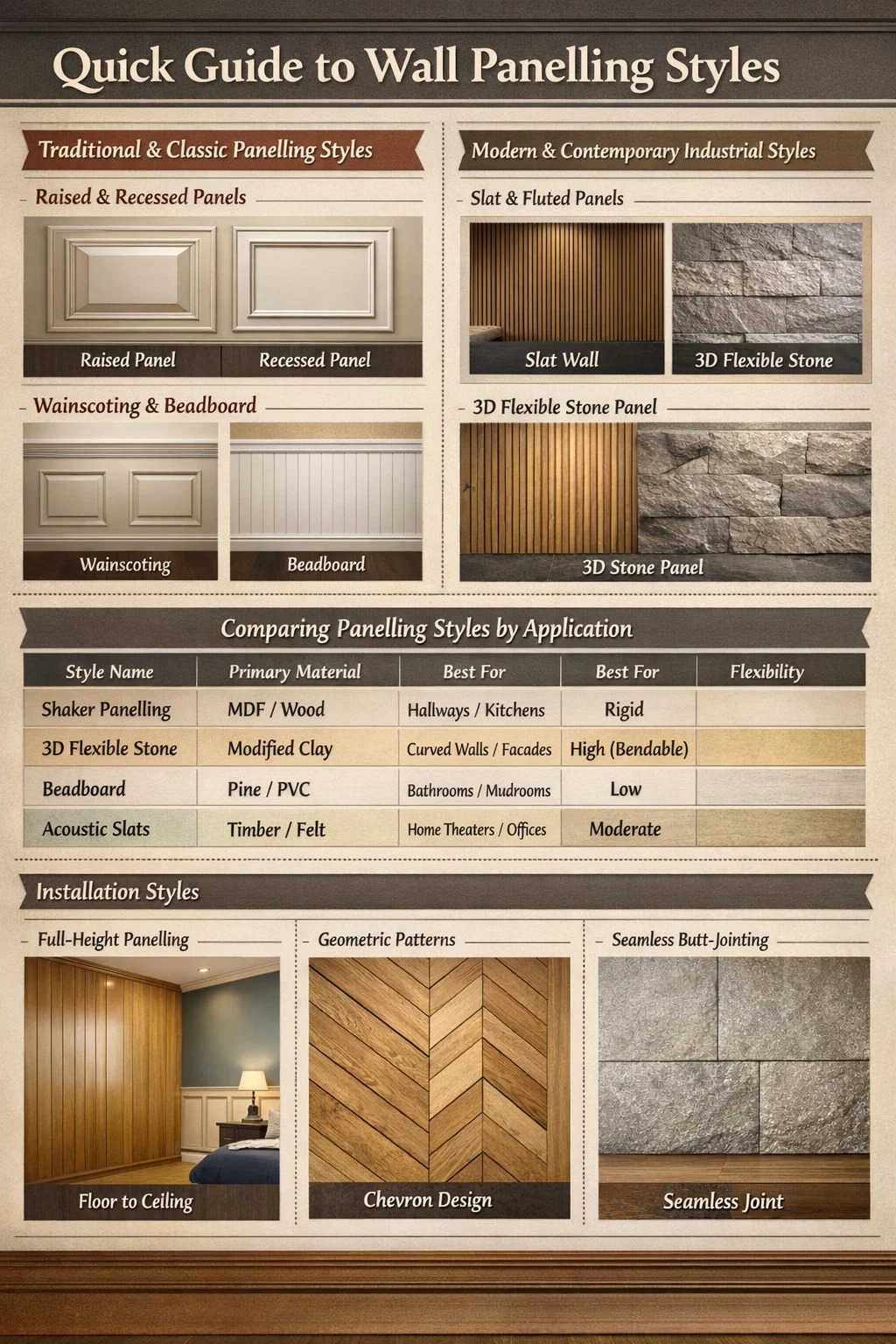
Quick Guide to Wall Panelling Styles
The world of interior design offers a diverse array of wall treatments ranging from traditional Raised Panels and Wainscoting to modern, high-tech solutions like the 3D Flexible Stone Wall Panel. To select the right style, you must balance the architectural era of your property with the desired tactile texture and maintenance requirements of the material.
Traditional and Classic Panelling Styles
Classic styles often draw inspiration from historical English and French estates. These designs focus on symmetry, depth, and woodwork craftsmanship.
Raised and Recessed Panels
Raised panelling features a center section that is elevated above the surrounding frame, often found in formal dining rooms or libraries. Recessed panels, such as Shaker-style, offer a cleaner look where the center sits lower than the frame. These are typically installed at a height of 900mm to 1200mm from the floor.
Wainscoting and Beadboard
Beadboard consists of narrow vertical planks joined by a "bead" or indentation. It is a staple of cottage and farmhouse aesthetics. Wainscoting refers more broadly to any decorative wall panel applied to the lower third of a wall to protect against scuffs in high-traffic hallways.
Modern and Contemporary Industrial Styles
Modern styles prioritize texture and innovative materials that can withstand contemporary urban environments.
Slat Walls and Fluted Panels
Slatted panels use thin strips of wood or composite material separated by small gaps. This style is highly sought after for its acoustic properties and its ability to make ceilings appear taller. It is frequently seen in Mid-Century Modern renovations.
3D Flexible Stone Wall Panel
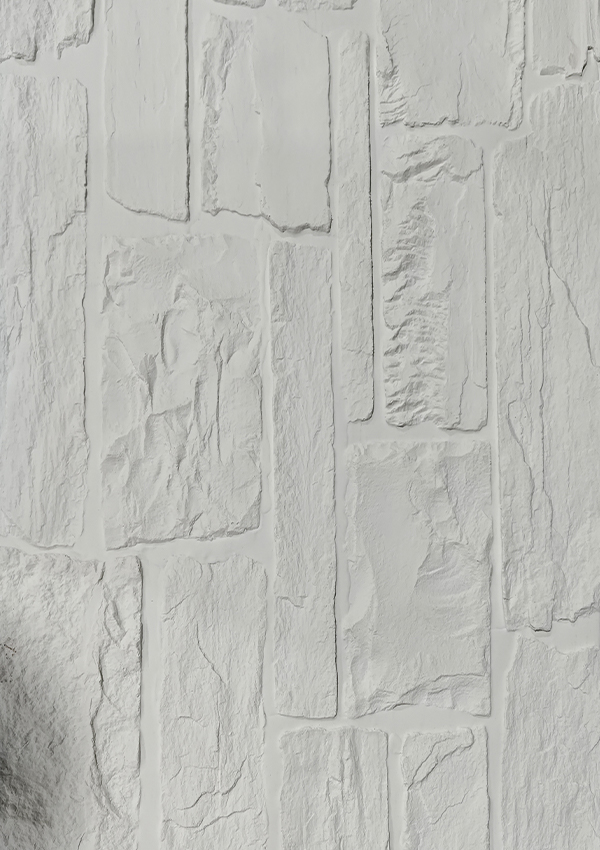
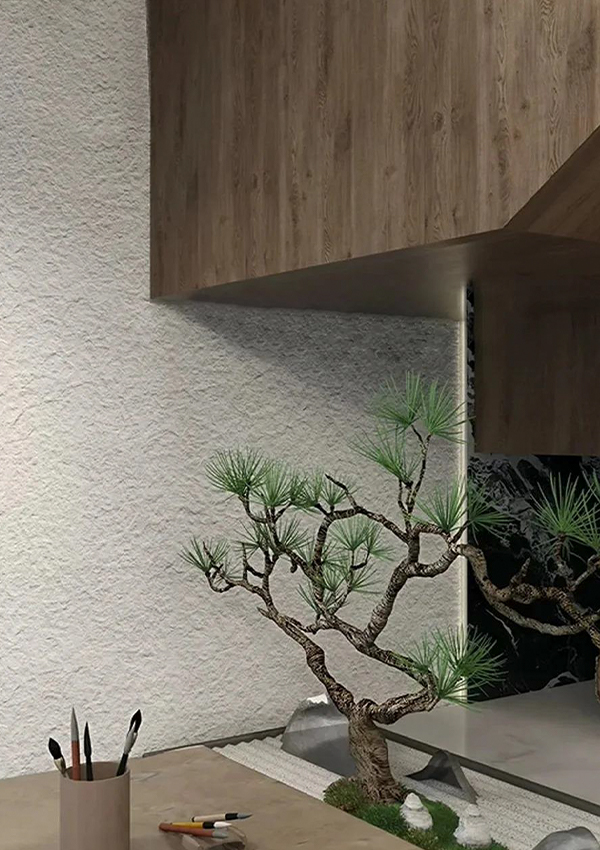
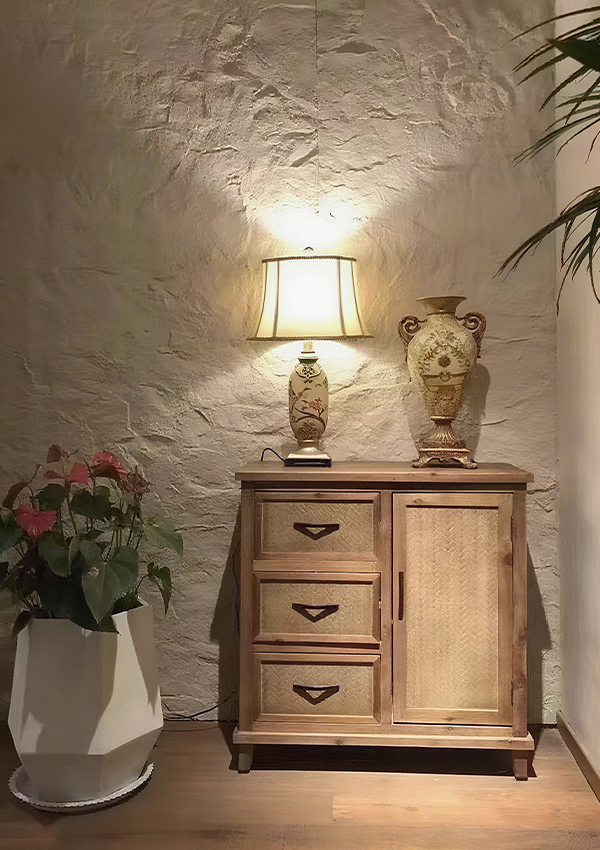
The 3D Flexible Stone Wall Panel represents the cutting edge of wall design. Unlike rigid stone slabs, this material is composed of modified clay or stone powder, allowing it to bend around curved surfaces and pillars. It provides the raw aesthetic of chiseled rock or slate but weighs only 3kg to 5kg per square meter, making it an ideal decorative wall panel for luxury feature walls.
Comparing Panelling Styles by Application
Different environments demand different technical specifications. Below is a breakdown of how various styles perform across common household and commercial areas.
| Style Name | Primary Material | Best For | Flexibility |
|---|---|---|---|
| Shaker Panelling | MDF / Wood | Hallways / Kitchens | Rigid |
| 3D Flexible Stone | Modified Clay | Curved Walls / Facades | High (Bendable) |
| Beadboard | Pine / PVC | Bathrooms / Mudrooms | Low |
| Acoustic Slats | Timber / Felt | Home Theaters / Offices | Moderate |
Structural Considerations and Installation Styles
Choosing a style also dictates how it will be installed. Some styles require a "tongue and groove" joinery, while others rely on surface-mounted adhesives.
- Full-Height Panelling: Covering the entire wall from floor to ceiling. This creates a dramatic, cohesive look and is perfect for the 3D Flexible Stone Wall Panel in a living room feature wall.
- Geometric Patterns: Using thin strips to create diamond or chevron shapes on a flat wall. This DIY-friendly style adds a modern touch to bedrooms.
- Seamless Butt-Jointing: Used primarily with high-end decorative wall panel options to create a monolithic look where no visible seams appear between the sheets.
Maintenance and Material Longevity
The lifespan of your panelling depends on the material chosen for the specific style. Traditional wood panelling requires periodic repainting or oiling to prevent drying. In contrast, the 3D Flexible Stone Wall Panel is waterproof and fire-resistant, maintaining its color and texture for 20+ years with only basic cleaning. When selecting a style for high-moisture areas like bathrooms, always prioritize PVC or stone-powder composites over standard MDF to avoid swelling and rot.
 ++86-18906857262 / ++86-13754347028
 No.49, Tunnan Industrial Zone, Daohui Street, Shangyu District, Shaoxing City, Zhejiang Province, China