

 English
 русский
 عربى
عربى

A set of design, research and development, production, sales, installation in one of the professional new decorative materials enterprises.
Content
- 1 Hidden Panel Fasteners: The Mounting System Behind Clean, Demountable Walls
- 2 How Hidden Panel Fasteners Work: Five Main Families
- 3 Five Specifications to Check Before You Buy Hidden Panel Fasteners
- 4 Matching Hidden Fasteners to Decorative Wall Panels
- 5 Installation Workflow for Hidden Panel Fastener Systems
- 6 Seven Mistakes That Ruin Hidden Panel Installations
- 7 Hidden Panel Fasteners FAQ
- 7.1 Can hidden panel fasteners be used with flexible stone wall panels?
- 7.2 What is the minimum thickness for wood veneer paneling that accepts hidden clips?
- 7.3 What load capacity should a hidden panel clip have?
- 7.4 How many clips are needed per square metre?
- 7.5 Are hidden panel fasteners reusable after a panel is removed?
- 7.6 Which tool is needed to remove a hidden-fastener panel?
Hidden Panel Fasteners: The Mounting System Behind Clean, Demountable Walls
Hidden panel fasteners are the clips, plates and locking components that attach a decorative wall panel so that no screw head, bracket edge or metal trim appears on the finished face. They produce a flush, continuous wall surface while keeping every panel removable for wiring access, maintenance and future reconfiguration. For anyone specifying wall panels in hotels, offices, healthcare spaces, retail interiors or high-end residences, the fastener decision is just as important as the panel itself.
A poorly matched fastener shows up within months: panels rattle in their frames, edges sag, and removal turns into a crowbar job. A well-selected system, by contrast, holds the panel firmly for years and lets a fitter release it in under a minute. The practical question is not whether hidden mounting is possible. It is which fastener family, load rating and installation method suit the panel you plan to install.
That question is especially relevant for buyers of flexible stone wall panels and wood veneer paneling, because the two material families behave very differently. Rigid wood-based panels accept clips directly; flexible stone sheets are usually adhesive-fitted and need a carrier board before hidden fasteners can be used. The sections below walk through both routes, the specifications that actually matter, and the mistakes that most often ruin a clean wall. Designers and contractors are also combining aluminium and wood veneer surfaces with flush mounting more often than before, a shift covered in our overview of new trends in aluminium and wood veneers.
How Hidden Panel Fasteners Work: Five Main Families
Every hidden fastener system follows the same logic. One half is fixed to the wall or ceiling, the other half is fixed to the back of the panel, and the two halves engage when the panel is pushed into position. Some systems lock mechanically, some use magnetic force, and some rely on gravity. The family you choose depends on panel weight, how often access is needed, and how much space exists behind the panel.
| Fastener family | Holding principle | Typical use | Access level |
|---|---|---|---|
| Spring-loaded clip | Clip snaps over a receiver plate | Medium-weight panels, quick service access | Frequent |
| Magnetic system | Magnets pull the panel to a steel plate | Light panels, display walls, removable art panels | Very frequent |
| Cam lock / quarter-turn | Keyed turn locks a stud into a socket | Secure panels in public areas | Occasional |
| Sliding hook / gravity | Panel drops onto fixed hooks and locks by its own weight | Heavy, large-format panels | Rare |
| Snap-in pin | Stainless pin pressed into a nylon bush | Signage, trade-show displays, small access covers | Frequent |
Spring-loaded clips are the most common choice for medium-weight panels. For one widely specified clip range, published manufacturer test data lists a pull-out load of 20 kg (40 lb) per clip, meaning a panel held by eight clips can resist roughly 160 kg of pull-out force before releasing (source: manufacturer load test data, 2026). This explains why spring clips dominate furniture-grade and hospitality panel installations: they combine secure holding with genuinely simple removal.
Magnetic systems suit lightweight decorative panels and display walls where access happens daily, but they provide no mechanical lock and are rarely used on ceilings. Cam locks and quarter-turn fasteners give positive locking, which makes them the safer choice for heavy panels or public areas. Sliding hooks are the oldest and strongest approach for large-format panels, while snap-in pins are a specialist solution for signage and small access lids.
Five Specifications to Check Before You Buy Hidden Panel Fasteners
A fastener that looks robust can still fail on site if its numbers do not match the panel. These five specifications decide whether the assembly stays tight, aligns cleanly and opens easily years later.
- Pull-out load. This is the force pulling the panel directly away from the wall. For typical interior wood veneer panels, a working range of 20-40 kg per clip is normal; large stone-look panels should use clips rated at 40 kg or more.
- Shear load. The panel weight pushes downward, which tests shear rather than pull-out. Most quality clips are stronger in shear, but you should still confirm a rating of at least 50 kg per clip so the panel cannot slide out of its receiver over time.
- Panel thickness and screw penetration. Clips need enough material behind them to hold screws. Most spring clip systems specify a minimum panel thickness of 12 mm; 15 mm or more gives noticeably better screw hold, especially in particleboard cores.
- Adjustment range. Look for 2-8 mm of in-plane and out-of-plane adjustment. This is the feature that saves a fitter when walls are slightly out of true; without it, a 0.5 mm wall irregularity becomes a visible panel gap.
- Corrosion resistance. Galvanized steel is fine for dry interior areas. Bathrooms, coastal locations and semi-exterior conditions require stainless steel components to prevent rust bleeding onto the panel edge.
The biggest single purchasing error is selecting clips by price before reading the load table. A clip that costs one third less but requires 15 mm minimum panel thickness will force you to change the entire panel specification halfway through a project.
Matching Hidden Fasteners to Decorative Wall Panels
Decorative panels split into two very different mounting categories. Rigid panels take fasteners directly; flexible panels do not. Knowing which category your material falls into prevents the most expensive mistake in this area.
Wood Veneer Panels: Direct Clipping on the Rear Face
Wood veneer paneling is rigid, dimensionally stable and perfectly suited to hidden clip systems. The veneer is laminated over engineered wood substrates, so screws and clip receivers hold well. When machining the rear face, keep clip positions at least 50 mm from the panel edges and use the screw depth recommended by the fastener manufacturer, not a longer screw that could pierce the visible surface.
If you are building panels from scratch, the substrate determines how well the clips hold. A wood veneer paneling base board is engineered with a stable core and consistent thickness across the sheet, which gives hidden clips a uniform surface to grip. Most complaints about loose clips trace back to panels with an unstable core or thickness variation above 0.5 mm. For a deeper comparison of plywood, MDF and other core options, the wood veneer paneling knowledge encyclopedia covers the practical differences in screw-holding performance.
 Base Board of Wood Veneer Paneling Suppliers, Custom Company - Shaoxing Mingyou Shaoxing Mingyou Decoration Materials Co., Ltd is a China OEM/ODM Base Board of Wood Veneer Paneling suppliers and custom company, Introd...View Product →
Flexible Stone Panels: Adhesive First, Clips on the Carrier Board
Flexible stone wall panels are thin sheets of natural stone bonded to a flexible backer. Because they bend, they are applied directly to walls or columns with adhesive, and that is exactly how most projects use them: adhesive is fast, invisible and extremely strong. Hidden panel fasteners enter the picture when a project requires demountability.
In that situation, the flexible stone sheet is first laminated onto a rigid carrier board, typically 12-18 mm plywood or a moisture-resistant structural board, and the carrier board is then fitted with hidden fasteners. This two-layer construction keeps the removable panel face flat and evenly supported. A slate-finish flexible stone wall panel laminated onto a plywood carrier is a practical example of this route, since the sheet can be cut, edged and backed before clips are installed. The flexible stone wall panel buyer knowledge guide explains how these thin stone sheets behave during cutting, bending and edge finishing, all of which matters when you plan a backing process.
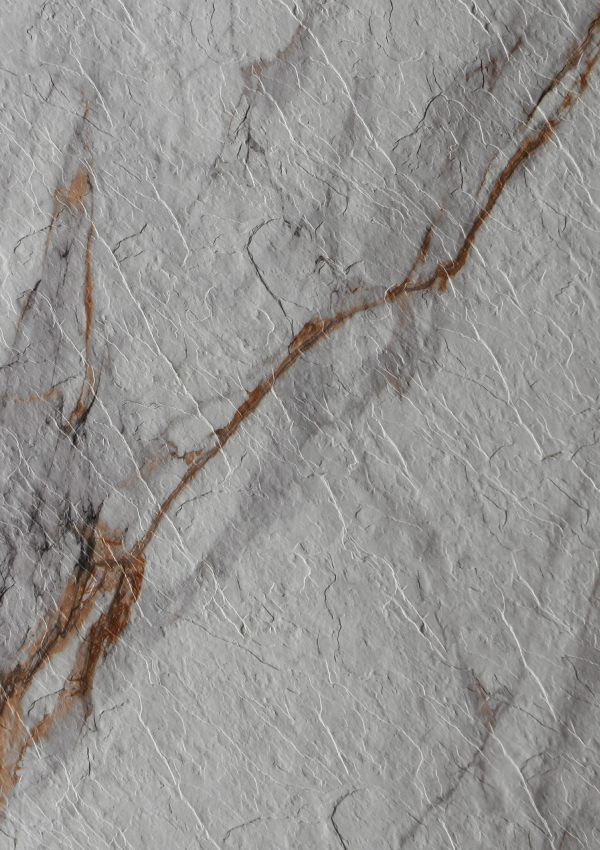 Slate Flexible Soft Stone Wall Panel Suppliers, Custom Company - Shaoxing MingyoShaoxing Mingyou Decoration Materials Co., Ltd is a China OEM/ODM Slate Flexible Soft Stone Wall Panel suppliers and custom company, Slat...View Product →
Metal-Faced and Textured Composite Panels
Metal-faced, concrete-look and textured composite panels sit between the two groups. Panels with a rigid core can take clips directly, but the screw length must be matched so it does not pierce the visible face. A rammed-earth-look flexible stone wall panel, for example, can be mounted on a carrier board in hotels and shops where designers want a warm earthen finish combined with service access behind the wall. The same rule applies: flexible materials need a rigid carrier; rigid materials can take clips directly.
 Fine/Coarse Rammed Earth Panel Flexible Soft Stone Wall Panel Suppliers, Custom Shaoxing Mingyou Decoration Materials Co., Ltd is a China OEM/ODM Fine/Coarse Rammed Earth Panel Flexible Soft Stone Wall Panel suppliers...View Product →
Installation Workflow for Hidden Panel Fastener Systems
The installation method is similar across most fastener families. The sequence below reflects standard practice on commercial interior fit-out sites and works for both wood veneer panels and carrier-mounted stone panels.
- Prepare the substrate. Check wall flatness with a straightedge; common site practice targets flatness within 3 mm over a 2 m span. Correct any high or low spots before fixing receivers.
- Mark the layout. Draw a grid on the wall and plan clip spacing at 300-400 mm around the panel perimeter, plus one row through the centre for panels wider than 600 mm.
- Fix receivers to the wall. Use the fastener manufacturer's recommended screws and wall plugs. Substituting cheaper screws is the fastest way to reduce the whole system's load rating.
- Prefit clips on the panel rear. Position them at the marked spots and verify that no screw penetrates the front face. A quick test with the panel held against a light source reveals any protruding points.
- Trial mount the panel. Press it into position and check edge alignment. Use the fastener's adjustment range to close gaps before final tightening.
- Confirm engagement. Run a hand across the panel face to feel for rocking, then test-remove and refit once to confirm the clips release and re-engage without binding.
Good practice is to keep two or three spare clips on site for every fifty panels. Clip springs can be damaged by paint or debris during installation, and replacing a full panel costs far more than swapping a clip.
Seven Mistakes That Ruin Hidden Panel Installations
The failures that show up most often on site are not caused by exotic conditions. They are basic specification and handling errors that are easy to prevent when you know what to look for.
- Buying clips without checking pull-out load. A panel may look light on paper but weigh far more once veneer, backing and edge treatments are added. Always calculate full panel weight per square metre before selecting a clip family.
- Forgetting minimum panel thickness. Clips screwed into a 9 mm panel can tear out within weeks. If the panel is thinner than the clip rating requires, glue a reinforcing strip to the rear face.
- Using one fastener type for all panel sizes. A large-format stone-look panel needs more and stronger clips than a small access door. Match clip count and rating to each panel, not to the average.
- Mixing galvanized and stainless steel. Dissimilar metals in a humid environment can cause galvanic corrosion, which shows up as stains on the panel face.
- Ignoring wall flatness. Hidden fasteners pull a panel to the wall but cannot force a badly bowed wall flat. The gaps appear at the panel edges instead.
- Planning no access strategy. If cables, valves or filters sit behind the panel, mark the removable sections clearly. Otherwise the first maintenance visit ends with a damaged panel.
- Using longer screws than specified. Over-torqued or over-long screws into particleboard strip the core or break through the face veneer. Follow the fastener datasheet exactly.
Most of these mistakes are caught during a single trial installation. Performing one full mock-up panel before production saves time, material and the cost of rework on an entire wall.
Hidden Panel Fasteners FAQ
Yes, but not directly. Flexible stone is a thin bending sheet and is normally bonded straight to the wall with adhesive. For a demountable installation, laminate the stone sheet onto a rigid carrier board of 12-18 mm plywood or a structural board, then attach the hidden clips to that carrier. The carrier gives the clips a stable material to bite into.
Most spring clip systems state a minimum panel thickness of 12 mm. Panels of 15 mm or more hold screws noticeably better, especially if the core is particleboard or lightweight wood fibre. If your panel is thinner than the clip specification, add a rear reinforcement strip at every clip position.
For standard interior panels, published manufacturer test data for a widely used clip range lists a pull-out load of 20 kg (40 lb) per clip, with heavier ranges rated at 40 kg or more. Multiply the per-clip rating by the number of clips on the panel and compare that figure to the total installed panel weight, including any backing board.
How many clips are needed per square metre?
A widely used spacing rule is 300-400 mm around the panel perimeter plus one centre row for panels wider than 600 mm. In practice this works out to roughly 6-9 clips per square metre for a standard panel, depending on weight and whether the panel is wall or ceiling mounted.
Yes. The receiver plates remain fixed to the wall and the clips remain attached to the panel, so the same pair can be re-engaged many times. Check the clip springs for damage during each removal, and keep spare clips on hand because a distorted spring can change the alignment of the panel.
Most spring-loaded and snap-in systems release with a flat trim tool or a wide putty knife inserted at the panel edge. Magnetic systems simply pull off, while cam locks need the matching key. Avoid prying with a screwdriver alone, because the concentrated force can dent the panel edge.




 ++86-18906857262 / ++86-13754347028
 No.49, Tunnan Industrial Zone, Daohui Street, Shangyu District, Shaoxing City, Zhejiang Province, China